Introduction
If you’ve spent any time on social media lately, you’ve likely encountered a video of a large, barrel-shaped animal looking completely unbothered while a duck, turtle, or even a small monkey sits on its head. This is the Cadibara, the world’s largest rodent and the internet’s undisputed champion of “chill vibes.”
Often affectionately referred to as a “coconut doggy” or “giant guinea pig,” the Cadibara (Hydrochoerus hydrochaeris) has captured the hearts of millions. But beyond the memes and the viral videos set to catchy tunes, these fascinating creatures have a rich natural history and unique biological traits that make them true marvels of the animal kingdom.
From their semi-aquatic lifestyle in South America to their surprising social structures, there is much more to these gentle giants than meets the eye. Whether you are curious about their biology or wondering if you can keep one as a pet, here is everything you need to know about the king of rodents.
What Exactly is a Cadibara?
despite their size, Cadibara are not pigs, dogs, or miniature hippos. They are rodents, closely related to guinea pigs and rock cavies. However, unlike the small hamster you might have had as a child, a capybara is massive. BK Horse
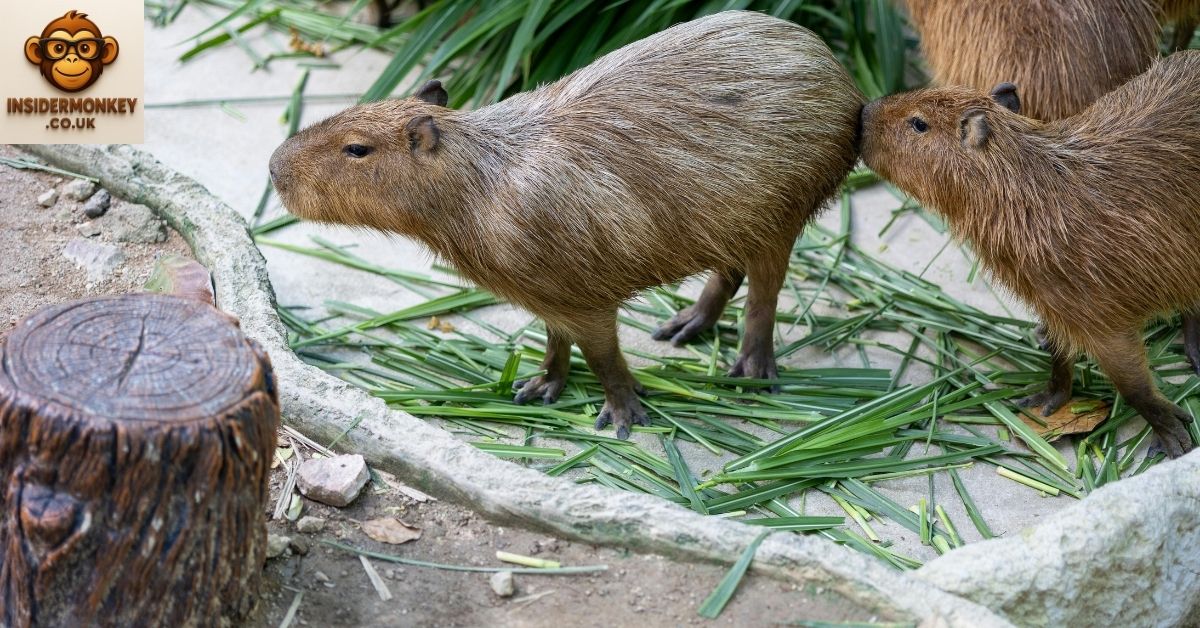
An adult Cadibara can grow to be about four feet long and two feet tall at the shoulder, weighing anywhere from 75 to 145 pounds. Females are typically heavier than males. They have a distinctive boxy head, a heavy, barrel-shaped body, and very short legs. Their fur is reddish-brown, wiry, and sparse, which helps them dry off quickly after a swim.
Perhaps their most distinctive feature is their face. Their eyes, ears, and nostrils are all located near the top of their heads. This evolutionary design allows them to remain submerged in water while still being able to see, hear, and breathe—much like a hippopotamus.
Masters of the Semi-Aquatic Life
To understand the Cadibara, you must look at its habitat. These animals are native to South America, specifically in regions east of the Andes, along the banks of the Amazon River, and in the flooded savannas of the Pantanal.
Water is life for a capybara. They are semi-aquatic mammals, meaning they spend a significant portion of their lives in or near water. Their feet are slightly webbed, which makes them excellent swimmers. When threatened by predators like jaguars, pumas, or caimans, they dive into the water to escape, capable of holding their breath for up to five minutes.
Their aquatic nature also helps them regulate their body temperature. South American heat can be intense, and Cadibara lack the ability to sweat effectively. Wallowing in mud and water keeps them cool and protects their sensitive skin from the sun.
The Social Butterflies of the Animal Kingdom
One of the main reasons capybaras have become internet sensations is their apparent friendliness. Images abound of Cadibara hanging out with crocodiles, birds, cats, and even humans. This reputation isn’t entirely accidental; Cadibara are highly social herd animals.
In the wild, they typically live in groups of 10 to 20 individuals, though during the dry season, many groups may congregate around dwindling water sources, forming herds of up to 100. Living in groups offers protection against predators. With more eyes watching the surroundings, the group is safer.
They are also surprisingly vocal. Capybaras communicate using a complex series of purrs, barks, whistles, squeals, and grunts. A sharp bark usually warns the herd of danger, sending everyone rushing toward the safety of the water.
Why do other animals sit on them?
The phenomenon of other animals using capybaras as furniture is well-documented. This is largely due to the Cadibara docile temperament. They are not aggressive unless provoked and tend to move slowly. For birds, a capybara offers a warm, mobile perch that attracts insects, making it a convenient hunting ground. The capybara, in turn, often gets a free grooming session as birds pick ticks and parasites off their skin—a symbiotic relationship that benefits both parties.
Can You Keep a Cadibara as a Pet?
This is the most common question lovers of this animal ask. Seeing how cute and cuddly they appear online, it is tempting to want one for your own backyard. However, owning a Cadibara is a massive commitment that is often discouraged for the average person.
The Reality of Capybara Care
While they can be domesticated to an extent, capybaras are exotic animals with specific needs that are difficult to meet in a standard household.
- They Need Water: A bathtub is not enough. Capybaras require a pool deep enough to submerge in completely to stay healthy and happy.
- They Need Company: Because they are herd animals, a solitary Cadibara can become depressed and anxious. If you get one, you essentially need to get two.
- Dietary Needs: They are herbivores with teeth that never stop growing. They need a constant supply of coarse grasses and hay to wear their teeth down. Interestingly, they also practice autocoprophagy (eating their own poop) in the morning to digest cellulose and extract maximum protein.
- Space and Destruction: They are large rodents. If bored, they can chew through furniture, dry wall, and wiring. They also require a significant amount of outdoor space to roam.
In many places, owning a Cadibara is illegal or requires special exotic animal permits. It is crucial to check local laws and consider the animal’s welfare before pursuing ownership.
Appreciating Nature’s Chillest Rodent
The Cadibara is a testament to nature’s ability to create creatures that are as adaptable as they are adorable. Their rise to internet stardom has helped raise awareness about the biodiversity of South American wetlands. While they might look like living cartoons, they are complex animals with specific environmental needs and social structures.
Whether you admire them from afar on your screen or are lucky enough to see one in a zoo or the wild, the Cadibara serves as a reminder that sometimes, the best approach to life is to find a nice pool of water, surround yourself with friends, and just relax.
Frequently Asked Questions
Are Cadibara dangerous?
Generally, no. Cadibara are known for being gentle and docile. However, they are still wild animals with large, sharp teeth. If they feel cornered or threatened, they can bite, and their bite is powerful.
What do Cadibara eat?
Cadibara are herbivores. Their diet consists mainly of grasses and aquatic plants. They also eat fruit and tree bark occasionally. An adult capybara can eat 6 to 8 pounds of grass per day.
How fast can a Cadibara run?
Do not let their chunky shape fool you. On land, a capybara can run as fast as a horse, reaching speeds of up to 22 miles per hour (35 km/h) when fleeing from a predator.
Do Cadibara smell bad?
They can. Cadibara have a scent gland on their snout (called a morrillo) which is especially prominent in males. They rub this on vegetation to mark territory. To humans, the smell can be musky and distinct, though not necessarily overpowering if the animal is kept clean.