
Introduction
The landscape of digital asset trading is constantly shifting. New strategies emerge, new assets gain traction, and traders are always on the lookout for an edge. Recently, interest has surged around a specific niche: Faston trading Etherions.
If you are new to this concept, you might be wondering what distinguishes this approach from standard day trading or holding strategies. It comes down to velocity and precision. Dealing with Etherions—a volatile and dynamic asset class—requires a specific mindset and a robust set of tools.
This guide explores the mechanics of this trading style, the risks involved, and how you can position yourself to potentially capitalize on market movements without falling victim to common pitfalls.
Understanding the Etherion Ecosystem
Before applying any high-speed strategy, you must understand the asset itself. Faston trading Etherions are characterized by rapid price fluctuations and liquidity pools that can shift at a moment’s notice. Unlike stablecoins or traditional blue-chip stocks, Etherions react sharply to market sentiment, technical updates, and community engagement.
This volatility is a double-edged sword. For a long-term investor, it can be a source of anxiety. For a Faston trader, however, volatility is the fuel that powers the engine. The goal isn’t to hold the asset for years; it is to identify short-term trends and capitalize on the delta—the difference between the entry and exit price over a compressed timeframe.
The Core Pillars of Faston Trading
The “Faston” approach differs from traditional swing trading. It emphasizes immediate execution and tight spreads. To succeed, you need to master three core pillars.
1. Speed of Execution
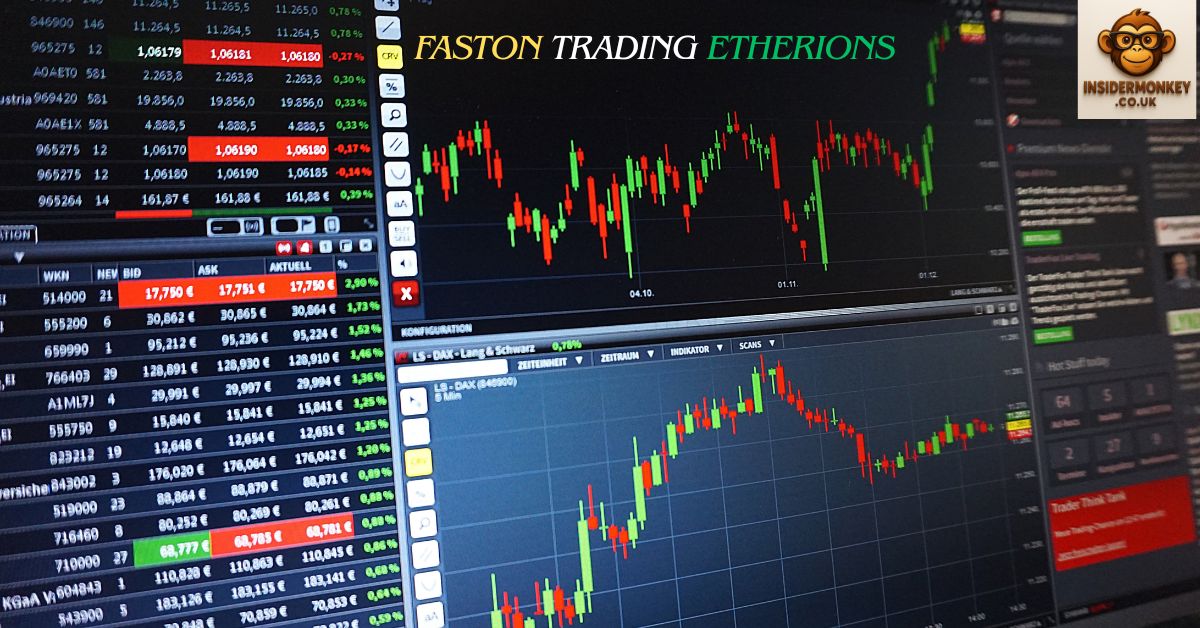
The name implies it: speed is everything. In this market, a delay of a few seconds can turn a profitable trade into a loss. Faston trading Etherions relies on low-latency connections and platforms that offer one-click execution. If you are manually entering prices and double-checking limit orders while the chart is moving vertically, you are already behind.
Many professionals use hotkeys or automated scripts to enter and exit positions instantly. The objective is to get in as the momentum builds and get out before the reversal occurs.
2. Technical Precision
You cannot rely on gut feeling. Successful trading of Faston trading Etherions requires a disciplined adherence to technical analysis. You should be looking at:
- Volume Profiles: meaningful price moves are almost always supported by high volume. If the price spikes on low volume, it is likely a trap.
- Moving Averages: shorter timeframes, such as the 9-period and 21-period exponential moving averages (EMA), are crucial for identifying immediate trends.
- RSI and Stochastic: These oscillators help identify overbought or oversold conditions, signaling when a reversal might be imminent.
3. Liquidity Management
Etherions can sometimes suffer from liquidity gaps. This means there may not be enough buyers at the exact price you want to sell at, leading to “slippage.” Slippage occurs when your order fills at a worse price than you intended.
In the Faston strategy, you must be aware of the order book depth. Avoid trading during hours of low volume, and be wary of entering position sizes that are too large for the market to absorb quickly.
Risk Management: The Survival Kit
The allure of quick profits often blinds traders to the reality of potential losses. Without strict risk management, high-frequency trading is simply gambling.
The 1% Rule
Never risk more than 1% of your total trading capital on a single trade. If you have a $10,000 account, your maximum loss on any given trade should not exceed $100. This ensures that even a string of bad luck won’t wipe out your portfolio.
Stop-Loss Placement
Mental stop-losses do not work in fast-moving markets. You need hard stops programmed into your software. In Faston trading Etherions, stops are usually tight. If the trade goes against you, the thesis is invalid, and you should exit immediately. Do not “hope” for a rebound.
Avoiding “Revenge Trading”
After a loss, the natural human instinct is to jump back in to win the money back. This is the fastest way to drain an account. If you hit your daily loss limit, walk away. The market will still be there tomorrow.
The Mental Game
Psychology plays a massive role in trading Etherions. The speed of the market triggers dopamine responses similar to gaming or gambling.
Discipline over Motivation: Motivation fluctuates; discipline remains constant. You need a set of rules that you follow every single day, regardless of how you feel.
Patience in Speed: It sounds contradictory, but you must be patient enough to wait for the perfect setup before you execute with speed. Over-trading is a common mistake. Just because you can make a trade every minute doesn’t mean you should.
Tools of the Trade
To execute the Faston strategy effectively, you cannot rely on basic mobile apps. You need a dedicated desktop environment.
- Charting Software: Use platforms like TradingView that allow for custom indicators and multi-chart layouts.
- News Aggregators: News often drives price before technicals do. rigorous news feeds can give you a heads-up on why a price is moving.
- Journaling: Keep a record of every trade. Note the entry, exit, profit/loss, and the reason you took the trade. Reviewing this data is the only way to improve over time.
Developing Your Strategy
The market for Etherions is not for the faint of heart. It rewards those who are prepared, disciplined, and quick to act. By focusing on technical precision, managing your risk rigorously, and keeping your emotions in check, you can navigate the volatility.
Start small. Test your Faston trading Etherions strategies in a paper trading environment (simulation) before risking real capital. Once you prove you can be profitable consistently, then—and only then—should you scale up.
