
Introduction
Every business, whether a scrappy startup in a garage or a multinational corporation, needs fuel to run. That fuel is capital. But knowing you need money is the easy part; figuring out where to get it is where many entrepreneurs stumble.
Choosing the right source of finance is one of the most critical decisions a business owner will make. The wrong choice can lead to cash flow crises, loss of control, or crippling debt repayments. The right choice, however, can propel growth, fund innovation, and provide a safety net during lean times.
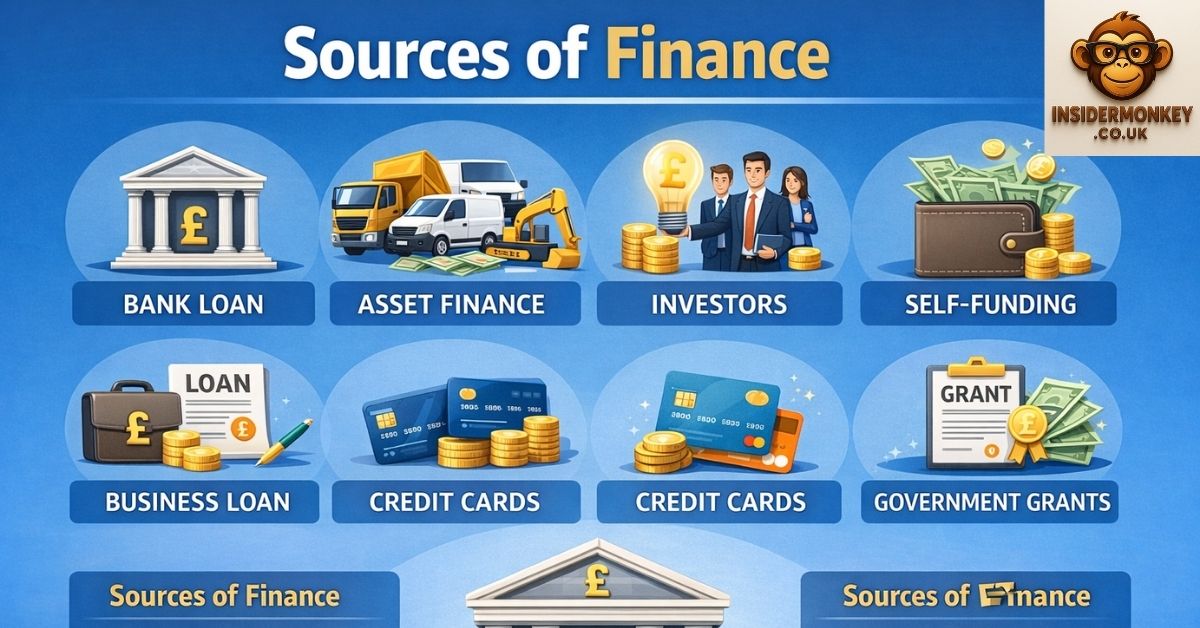
This guide breaks down the primary sources of finance available to modern businesses. We will explore internal and external options, weighing the pros and cons to help you determine which financial avenue aligns best with your business goals.
Internal Sources of Finance

Before looking outward for investors or lenders, it is wise to examine what resources already exist within the business. Internal sources are funds found inside the business itself or from the Sources of Finance the owner.
1. Retained Earnings
Retained earnings are the profits that a company has earned to date, less any dividends or other distributions paid to investors. Instead of distributing this profit to shareholders, the company reinvests it back into the business.
Pros:
- No cost: Unlike loans, there is no interest to pay. Unlike equity, you don’t give away a slice of the company.
- Control: Management retains full control over how the funds are used without needing approval from external stakeholders.
- Flexibility: The funds are immediately available for use.
Cons:
- Limited availability: New businesses often don’t have profits yet, and even established ones might have low margins.
- Opportunity cost: Shareholders might become unhappy if they aren’t receiving dividends, potentially lowering the company’s valuation.
2. Sale of Assets
Do you have machinery that hasn’t been used in years? A fleet vehicle that sits idle? Selling non-current assets (assets owned for more than a year) that are no longer needed can generate a quick injection of cash.
Pros:
- Quick cash: Can provide immediate liquidity for urgent needs.
- Efficiency: Reduces storage and maintenance costs for unused items.
Cons:
- One-time option: You can only sell an asset once. It’s not a sustainable long-term strategy.
- Loss of potential: If you need that equipment later, you will have to buy it again, likely at a higher price.
3. Personal Savings (Bootstrapping)
For startups, this is often the very first source of finance. The owner uses their own savings to get the business off the ground.
Pros:
- Total ownership: You keep 100% of the equity.
- Discipline: Spending your own money tends to make you extremely careful with budgeting.
Cons:
- Personal risk: If the business fails, your personal savings are gone.
- Limited scale: Most individuals have a cap on how much they can personally invest, which might slow growth.
External Sources of Finance: Debt
Debt financing involves borrowing money that must be paid back over time, usually with interest.
4. Bank Loans
The most traditional form of external finance. You borrow a specific amount from a bank and repay it over a set period with interest.
Pros:
- Predictability: Fixed monthly payments help with budgeting.
- Tax benefits: Interest payments on business loans are often tax-deductible.
- Retain equity: The bank doesn’t get a say in how you run your business or a share of the profits.
Cons:
- Strict criteria: Banks are risk-averse. You need a strong credit history and a solid business plan.
- Collateral: You often have to put up assets (like property or inventory) as security. If you default, you lose the asset.
- Interest costs: You have to pay back more than you borrowed.
5. Trade Credit
This is a B2B arrangement where suppliers allow you to buy goods now and pay later, typically within 30, 60, or 90 days.
Pros:
- Improves cash flow: You can sell the goods before you have to pay for them.
- Interest-free: If you pay within the agreed terms, it’s effectively an interest-free loan.
Cons:
- Risk of bad relations: Late payments can damage relationships with critical suppliers.
- Loss of discounts: You might miss out on “early payment discounts” offered for immediate cash settlement.
6. Overdrafts
An agreement with the bank that allows you to withdraw more money than is currently in your account, up to a limit.
Pros:
- Flexibility: Great for handling short-term cash flow gaps (e.g., waiting for a client to pay).
- Pay for what you use: You only pay interest on the amount overdrawn.
Cons:
- High interest rates: Overdrafts usually have much higher interest rates than term loans.
- Recall risk: The bank can ask for the money back at any time.
External Sources of Finance: Equity
Equity financing involves selling a portion of your business to investors in exchange for capital.
7. Angel Investors
High-net-worth individuals who invest their personal money into startups, usually in exchange for equity.
Pros:
- Mentorship: “Angels” often provide valuable advice, industry contacts, and guidance.
- Less pressure: They are often more patient than banks regarding repayment (since they are looking for long-term growth).
Cons:
- Loss of equity: You give up a portion of ownership and future profits.
- Loss of control: Investors will likely want a say in major business decisions.
8. Venture Capital (VC)
Venture capital firms are professional groups that manage pooled funds from many investors. They invest large sums into high-growth potential companies (like tech startups).
Pros:
- Significant capital: VCs can provide millions of dollars in funding.
- Credibility: VC backing can signal to the market that your business is a serious player.
Cons:
- High stakes: VCs expect massive returns and rapid growth. The pressure to perform is intense.
- Dilution: You will likely have to give up a significant percentage of your company and board seats.
9. Crowdfunding
Platforms like Kickstarter or Indiegogo allow you to raise small amounts of money from a large number of people, usually in exchange for early access to a product (rewards-based) or equity (equity crowdfunding).
Pros:
- Market validation: If people fund your project, it proves there is demand for your product.
- Marketing: A successful campaign generates buzz and builds a customer base before you even launch.
Cons:
- All-or-nothing: On many platforms, if you don’t hit your goal, you get nothing.
- Public failure: If the campaign fails, everyone sees it, which can hurt your brand reputation.
Alternative Sources of Finance
10. Leasing
Instead of buying an asset (like a vehicle or photocopier) outright, you rent it.
Pros:
- Low upfront cost: You don’t need a large lump sum of cash.
- Up-to-date equipment: Easier to upgrade to newer models when the lease expires.
Cons:
- Higher long-term cost: You often end up paying more than the asset’s value over time.
- No ownership: You don’t own the asset at the end (unless it’s a specific “lease-to-own” agreement).
11. Government Grants
Funds provided by the government to support specific industries or initiatives (e.g., green energy, innovation, export).
Pros:
- Free money: Grants generally do not need to be repaid.
- No equity loss: You keep full ownership.
Cons:
- Highly competitive: The application process is rigorous and time-consuming.
- Restrictions: The money must be spent exactly as specified in the grant agreement.
Factors to Consider When Choosing a Source
There is no “best” source of finance; only the source that is best for your current situation. When making your decision, consider these four factors:
- Cost: What is the interest rate? How much equity are you giving away? Calculate the total cost of the capital.
- Risk: What happens if you can’t make repayments? Are you putting personal assets on the line?
- Control: Are you willing to share decision-making power with investors, or do you want to retain total autonomy?
- Duration: Do you need money for a few months (short-term) or for five years (long-term)? Match the source to the need. A 5-year loan for short-term stock issues is bad planning; an overdraft for a new factory is risky.
Securing Your Financial Future
Finance is the lifeline of any enterprise. Whether you choose to bootstrap, borrow, or bring on partners, the goal remains the same: ensuring your business has the resources it needs to thrive. Take the time to analyze your needs, stress-test your repayment ability, and choose the path that offers the best balance of risk and reward for your specific journey.
Frequently Asked Questions
What is the difference between debt and equity financing?
Debt financing involves borrowing money that must be repaid with interest (like a loan). You retain full ownership but take on the obligation of monthly payments. Equity financing involves selling a piece of your company to an investor. You don’t have monthly repayments, but you share profits and decision-making power.
Can I combine different sources of finance?
Absolutely. Most successful businesses use a “capital stack” or mix of financing. For example, a company might use a bank loan to buy a building, an overdraft for monthly cash flow variance, and angel investment to fund R&D for a new product.
Is crowdfunding a viable option for B2B companies?
It is more difficult. Rewards-based crowdfunding (Kickstarter) works best for cool consumer gadgets or artistic projects. However, equity crowdfunding can work for B2B companies if they can demonstrate a strong path to profitability for potential investors.
What is the cheapest source of finance?
Retained earnings are generally considered the cheapest because there are no interest payments and no transaction costs to obtain the funds. However, bootstrapping (personal savings) is also low-cost, provided you don’t account for the opportunity cost of investing that money elsewhere.
